
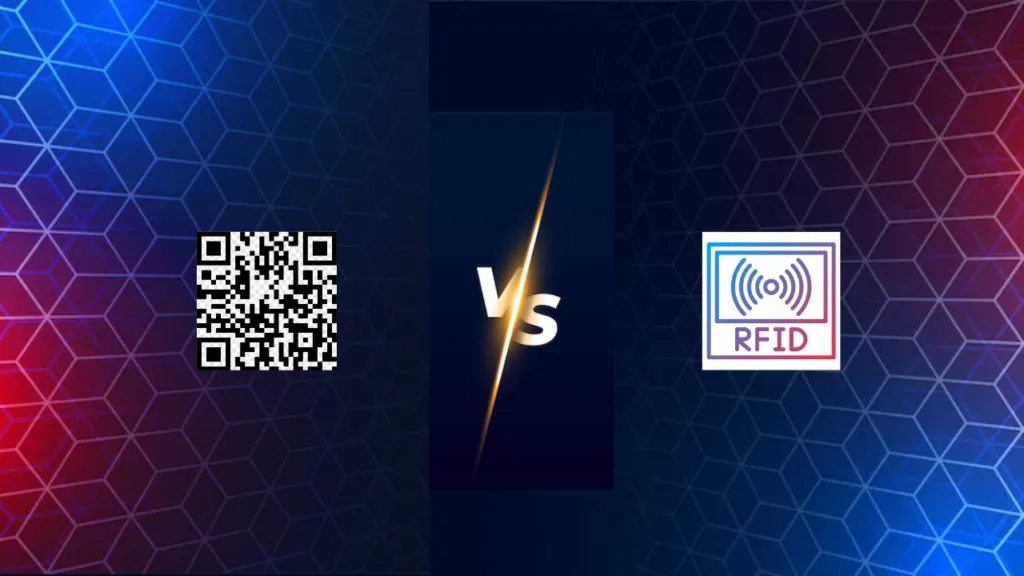
Efficient inventory management is the backbone of every business—whether you run a warehouse, retail store, university lab, manufacturing unit, or healthcare facility. Two of the most widely used technologies are Barcode and RFID. But when it comes to Barcode vs RFID, which one is the right choice for your business?
In this article, we’ll break down the key differences, advantages, costs, and best use cases to help you make an informed decision.
Table of Contents
ToggleWhat Is a Barcode Inventory System?
A barcode inventory system uses printed labels (1D or 2D codes) that must be scanned manually using a handheld scanner or mobile device.
Advantages of Barcodes
- ✔ Low-cost implementation
- ✔ Easy to print and replace
- ✔ Works for almost every industry
- ✔ High accuracy when scanned correctly
Limitations
- ❌ Requires line-of-sight scanning
- ❌ One item scanned at a time
- ❌ Labels can get damaged or torn
- ❌ Slower during large stocktakes
What Is RFID Inventory Tracking?
RFID (Radio Frequency Identification) uses radio waves to capture data stored in RFID tags—without requiring line-of-sight scanning.
Advantages of RFID
- ✔ Scan hundreds of items in seconds
- ✔ No line-of-sight required
- ✔ Track inventory in real-time
- ✔ Improves accuracy and reduces manual labour
- ✔ Ideal for high-value or frequently used items
Limitations
- ❌ Higher upfront cost
- ❌ Metal and liquids can cause interference
- ❌ Requires RFID-compatible readers and tags
Barcode vs RFID: Key Differences
| Feature | Barcode | RFID |
|---|---|---|
| Scanning | Manual, one-by-one | Automatic, bulk scanning |
| Line of Sight | Required | Not required |
| Speed | Slow | Very fast |
| Cost | Low | Medium to high |
| Durability | Can get damaged | Highly durable |
| Use Cases | Retail, basic inventory | Warehousing, manufacturing, labs, high-value assets |
| Accuracy | High | Very high |
Which Inventory Counting Technology Is Right for Your Business?
Choosing between Barcode vs RFID depends on your operational needs.
✔ Choose Barcode if you want:
- A budget-friendly solution
- Simple inventory processes
- Easy setup and low maintenance
- Compatibility across all devices
✔ Choose RFID if you need:
- Faster stocktaking (up to 10x faster)
- Real-time visibility
- Tracking high-value or frequently used assets
- Automation and reduced human effort
- Advanced compliance features (e.g., labs, healthcare)
Use Cases Across Different Industries
Retail
- Barcodes for everyday inventory
- RFID for automated stock counts and loss prevention
Universities & Labs
- RFID for lab equipment, instruments, tool check-in/check-out
- Barcodes for consumables
Warehousing
- RFID for pallet and carton tracking
- Barcodes for regular SKUs
Healthcare
- RFID for medical equipment tracking
- Barcodes for patient records and medication labels
Why Choose Datascan Australia?
If you’re looking for a reliable partner to implement Barcode or RFID inventory tracking, Datascan Australia provides complete solutions tailored to your business.
👉 Visit: https://datascan.com.au/
Datascan Offers:
- RFID handheld scanners and fixed readers
- Barcode scanners and printing solutions
- Inventory and asset tracking systems
- Software integration & custom dashboard
- Australian-based support and consulting
Whether your business is upgrading from barcodes or planning a full RFID transformation, Datascan ensures a smooth, scalable, and affordable implementation.
Frequently Asked Questions
What is the main difference between barcode and RFID technology?
Barcodes require manual, line-of-sight scanning of each item, while RFID uses radio waves to scan multiple tagged items automatically—without needing direct visibility.
Is RFID more accurate than barcodes for inventory counting?
Yes. RFID offers higher accuracy because it scans items automatically and reduces human error. Barcodes are accurate too but depend on correct manual scanning.
Which technology is more cost-effective: Barcode or RFID?
Barcodes are more cost-effective upfront due to inexpensive labels and simpler hardware. RFID has a higher initial cost but offers faster stocktaking and long-term labour savings.
Can RFID and barcode systems be used together?
Absolutely. Many businesses use a hybrid system—RFID for asset tracking and barcodes for consumables or low-value items.
Is RFID suitable for all types of products?
RFID works for most products, but tags can be affected by metal surfaces and liquids. Special RFID tags designed for these environments are available.
Conclusion
Conclusion
The debate of Barcode vs RFID doesn’t have one universal answer—both technologies have unique strengths.
- If you want speed, automation, and accuracy, choose RFID.
- If you want affordability and simplicity, choose Barcodes.
To find the best fit for your industry, workflows, and budget, consult the experts at Datascan Australia.
👉 Visit: https://datascan.com.au/ to explore solutions for your business.
