
Smart Tracking Technology for efficient operations
Our technology support your operations — scanners, printers, labels, and software to deploy using RFID, Barcode, IOT, GPS.

Whether you need a simple Barcode, RFID or GPS/IoT or BLE Technology for your Tracking needs, Data Scan has the right fit for your business.
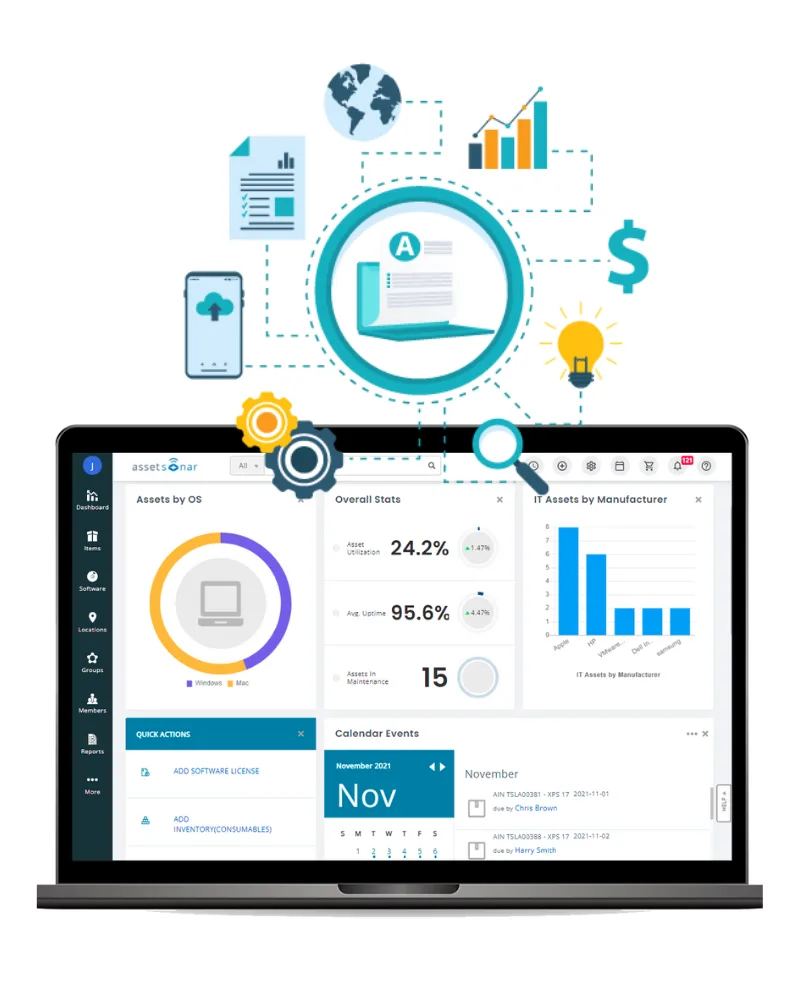
Barcode Technology
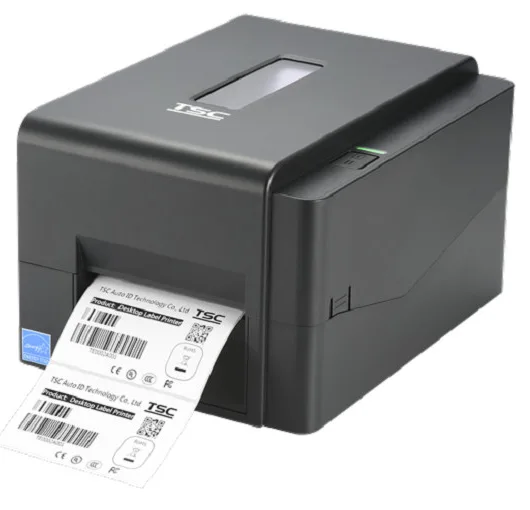
The trusted, industry-standard approach to asset and inventory management. Barcode labels are affixed to assets and scanned using handheld readers or mobile devices to instantly capture and log data into your system.
Lowest cost to deploy- Go live in days
- Suits all industries
RFID Technology
RFID uses radio waves to automatically identify and track tags on your assets — no line-of-sight needed, no manual scanning. Read hundreds of items simultaneously in a matter of seconds, dramatically cutting audit times.
- Bulk scanning
- No line-of-sight required.
- Dramatically lower labour costs on stock takes & audits
GPS and IoT Tags
For assets that move beyond your walls — vehicles, field equipment, remote machinery — GPS and IoT tags deliver live geolocation, environmental monitoring and automated alerts, visible from anywhere in the world
- Live geolocation
- Geo-fence alerts
- Temperature, Humidity, Shock sensors monitoring.
BLE Technology
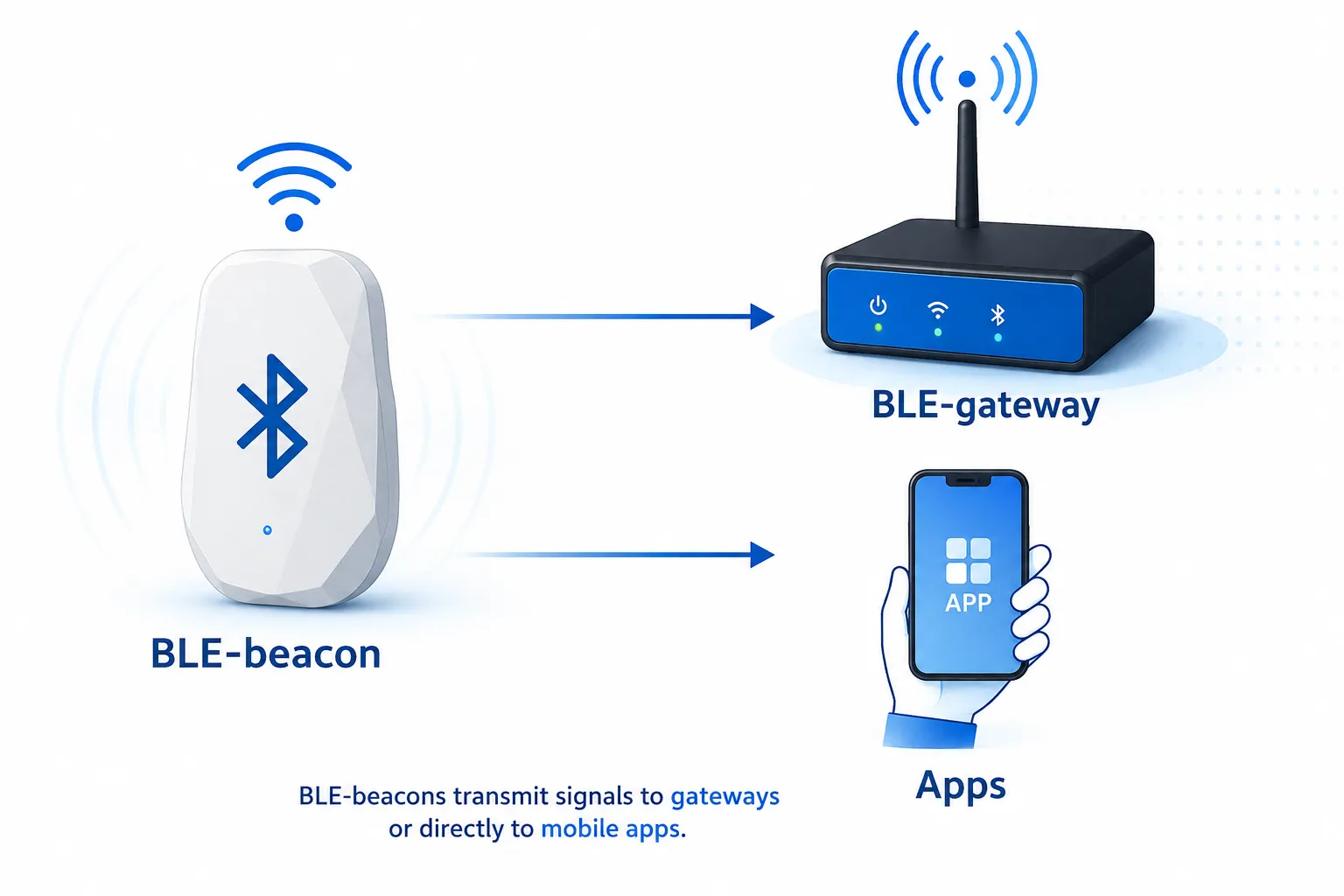
Bluetooth Low Energy (BLE) is a short-range wireless communication technology designed for continuous, low-power asset tracking within indoor environments. BLE beacons — small, coin-battery-powered tags
- Precise indoor positioning
- Real-time visibility without scanning
- Low infrastructure cost
RFID stands for Radio Frequency Identification. Instead of a printed label that requires a scanner to be pointed at it, RFID uses radio waves to communicate between a small electronic tag attached to your asset and a reader device. The key difference is automation — RFID readers can detect and identify dozens or hundreds of tagged items simultaneously, without any line-of-sight and without a staff member manually scanning each one. It is barcode tracking, but at a fundamentally different speed and scale.
RFID tags come in two main types. Passive tags have no battery — they draw power from the reader’s radio field when in range (typically up to 10 metres for UHF RFID). They are inexpensive, long-lasting and ideal for most asset and inventory tracking. Active tags have their own battery and can broadcast signals over much longer ranges (up to 100+ metres) and are used for tracking large equipment across expansive sites. Data Scan will recommend the right tag type based on your read range requirements, environment and budget.
Reduced losses, better utilisation, accurate financial reporting, faster audits, and significant time savings compared to manual, spreadsheet-based tracking.
No — and this is one of RFID’s most powerful advantages over barcode. Radio waves pass through most non-metallic materials including cardboard, plastic and fabric. This means you can scan an entire pallet of boxed goods without opening any boxes, or read all items on a shelf without removing them. Note that metal and liquids can interfere with radio signals — Data Scan uses specialised on-metal tags and antenna positioning to address these environments.
A typical RFID project , from site survey to go-live, may takes between 2 and 10 weeks depending on site complexity, the number of assets and the level of software integration required. Data Scan manages the full process including site survey, hardware specification, tag selection, software configuration, testing and staff training.
RFID ROI is typically realised through three areas: labour savings on stocktakes and audits (organisations regularly report reducing days-long counts to hours), reduced asset loss and shrinkage (better visibility means fewer lost or stolen items), and compliance cost reduction (automated audit trails replace manual paperwork). Most Data Scan customers achieve full ROI within 6 to 18 months of deployment.
Key Benefits
✓Lowest cost to deploy — ideal for small & medium businesses
✓Go live in days — quick, straightforward implementation
✓Simple staff training — intuitive scan-and-go workflow
✓Offline-capable — syncs automatically when reconnected
✓Suits all industries — healthcare, education, government & more
GPS (Global Positioning System) asset tracking uses satellite signals to determine the precise geographic location of a tagged asset anywhere in the world. IoT (Internet of Things) tags go further — they combine GPS location with onboard sensors (temperature, humidity, vibration, shock, battery level) and transmit all of this data continuously to a cloud platform. Together, GPS and IoT tracking give you a live, data-rich view of every asset regardless of where it is.
GPS and IoT tracking is designed for mobile or remote assets — things that move or are deployed away from a fixed facility. Common examples include vehicles and fleet (trucks, forklifts, site vehicles), heavy plant and machinery (excavators, generators, compressors), field equipment (tools deployed to remote sites), shipping containers, and any high-value portable asset that operates outdoors or across multiple locations.
Most GPS IoT tags transmit location and sensor data via mobile network (4G/LTE or 3G). This means coverage quality affects data frequency in remote areas. Data Scan also offers solutions using satellite communication networks (such as Iridium or Globalstar) for assets in areas with no mobile coverage — ensuring visibility even in remote outback mining or pastoral locations anywhere in Australia.
Battery life varies by tag model and update frequency. High-frequency tracking (every minute) typically delivers weeks to months of battery life. Low-power IoT tags configured for infrequent updates can run for 2 to 5 years on a single charge. Data Scan selects the right tag hardware based on your expected update frequency, environment and maintenance access constraints — particularly important for assets in remote locations.
A geo-fence is a virtual boundary you define on a map around a specific area — such as a mine site, depot, job site or city boundary. When a GPS-tracked asset crosses that boundary (either entering or leaving), the system immediately sends an alert to nominated staff via email, SMS or app notification. Geo-fences are invaluable for theft prevention, unauthorised movement detection, ensuring equipment stays on licensed sites and monitoring contractor compliance.
Yes — this is where IoT technology adds significant value beyond simple GPS. Data Scan’s IoT tags can monitor temperature and humidity (critical for cold chain and pharmaceutical logistics), vibration and shock (detecting rough handling or equipment impacts), tilt and orientation (overturning detection for vehicles), ignition status (for fleet management) and battery or power levels. All sensor data is logged alongside location in the management platform.
Yes. Data Scan’s platform stores a complete movement history for every tracked asset. You can replay the route an asset took over any time period, view dwell times at specific locations, generate movement reports for compliance or insurance purposes, and investigate incidents by reviewing exactly where an asset was and when. Historical data is invaluable for theft investigations, contractor billing verification and equipment utilisation analysis.
Mining and resources (tracking equipment across large remote sites), construction (monitoring plant across multiple active job sites), logistics and transport (fleet tracking and cold chain compliance), defence (sensitive equipment accountability), utilities (field crew and equipment management) and agriculture (machinery and infrastructure monitoring across large properties) all see significant operational improvements from GPS and IoT asset tracking.
Key Benefits
✓ Ultra-low power consumption — BLE tags run for 2–5 years on a single coin cell battery
✓ Precise indoor positioning — Provides room-level or bay-level location accuracy inside buildings where GPS cannot penetrate, making it the go-to choice for hospitals tracking equipment across wards.
✓ Low infrastructure cost — BLE gateways are inexpensive and easy to install. Many modern buildings, smartphones and tablets already have Bluetooth built in, reducing additional hardware spend.
✓ Real-time visibility without scanning — Unlike barcode systems, staff never need to manually scan an item. The system continuously reports asset locations as they move through your building.
✓ Scalable and flexible — Add tags and gateways incrementally as your needs grow. BLE works equally well tracking 50 assets in a single office or 5,000 assets across a multi-site hospital campus.
✓ Best suited for: Hospitals and aged care facilities, corporate office campuses, large retail stores, smart buildings, universities and any indoor environment where knowing the precise room-level location of assets saves staff time and reduces equipment loss
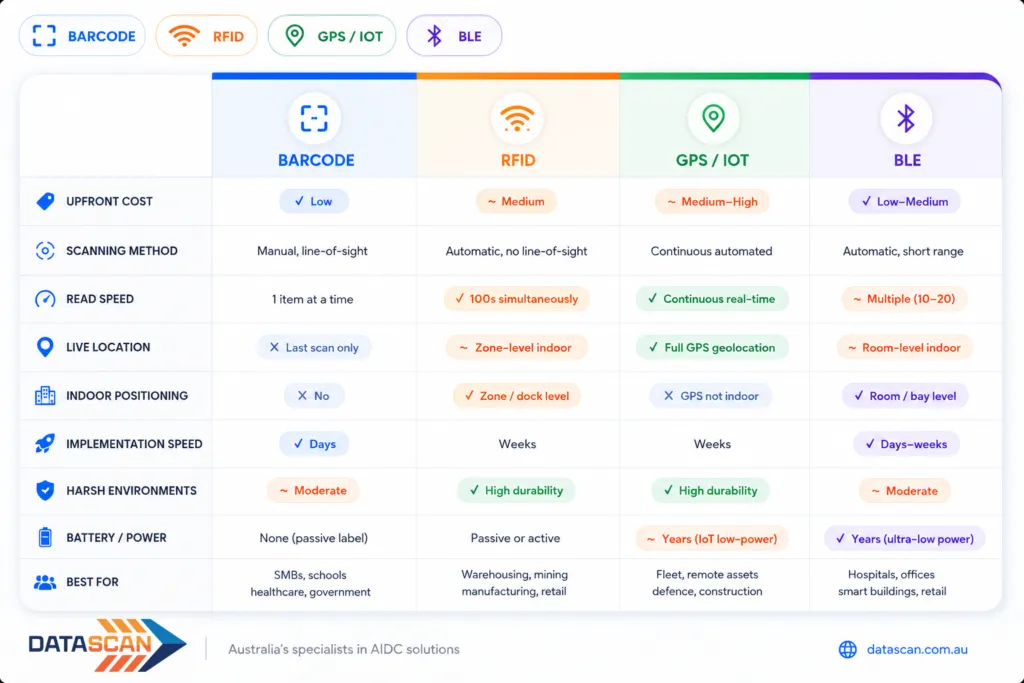
Side-by-Side Comparison
Technology at a Glance
Which tracking technology
suits your business?
Answer 4 quick questions and we’ll instantly recommend the ideal asset tracking technology for your needs — no obligation.
DataScan Technology Finder
Barcode · RFID · GPS / IoT · BLE
Industy Leading Brands We work with







Trusted by Australian Leaders
Proudly supporting schools, hospitals, government & enterprises.
Proven Technology
Reliable, accurate and built for real-world environments.
Local Support, Always
Australian-based support when you need it most.
Get a Free Consultation
Tell us about your needs and our experts will get back to you.