

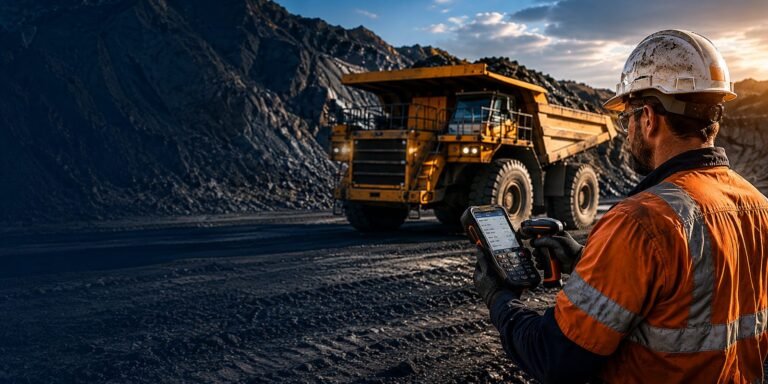
Mining operations depend on high-value equipment, vehicles, tools, spare parts and safety assets spread across challenging environments. Effective asset tracking in mining helps teams reduce search time, improve utilisation, prevent loss, support maintenance planning and strengthen site security.
But no single tracking technology fits every asset. RFID, barcode and GPS each solve a different visibility problem. The strongest mining asset-tracking strategy often combines all three based on asset type, location and operational need. DataScan provides RFID, barcode and GPS-enabled asset-tracking solutions designed for demanding industrial environments.
Why Asset Tracking Matters in Mining
Mining sites face dust, vibration, extreme temperatures, remote locations, underground connectivity gaps and large volumes of mobile plant. These conditions make manual spreadsheets, paper registers and basic visual checks slow and unreliable.
A structured asset-tracking system helps mining teams:
- Locate haul trucks, loaders, drills, generators and tools faster
- Reduce equipment downtime and unplanned maintenance
- Track tool issue, return and calibration status
- Improve spare-parts and inventory accuracy
- Monitor high-value assets and reduce theft or misplacement
- Support compliance, safety inspections and audit readiness
Asset tracking can improve fleet utilisation, reduce equipment search time, support preventive maintenance and enhance security for high-value assets.
RFID for Mining Asset Tracking
RFID, or Radio Frequency Identification, uses radio waves to identify tagged assets through fixed readers, handheld readers or portals. Unlike barcodes, RFID does not require direct line of sight, and a reader can identify many tagged items at once.
Best use cases
RFID is ideal for:
- Hand tools, PPE, radios and small equipment
- Tool crib check-in and check-out
- Spare parts and maintenance inventory
- Assets moving through workshops, stores, gates or processing areas
- Zone-level tracking in underground or covered areas
RFID tags are generally more durable than barcode labels and can withstand harsh conditions, dust and vibration. They also store more data and do not require line-of-sight scanning.
RFID advantages
- Bulk scanning: hundreds of items can be read per second
- No line of sight required
- Faster audits and stocktakes
- Reduced manual data entry
- Strong performance for repetitive asset movements
- Suitable for rugged mining environments when using industrial-grade tags and readers
DataScan’s RFID solutions support high-speed, automated identification and bulk scanning, helping reduce labour costs and improve operational accuracy.
RFID limitations
RFID is excellent for identifying assets at defined points, but it is not always the best choice for continuous location tracking across a large open-pit site. Fixed readers require infrastructure, and passive RFID range is limited compared with GPS.
Barcode Tracking for Mining Assets
Barcode tracking uses printed labels scanned with handheld devices, mobile computers or fixed scanners. It remains one of the most cost-effective ways to identify assets, record movements and connect physical items to an asset-management system.
Best use cases
Barcode is well suited to:
- Low- to mid-value tools and equipment
- Spare parts, consumables and inventory
- Maintenance records and inspection checklists
- Calibration certificates and compliance documentation
- Assets scanned individually at service points
Barcode labels are attached to assets and scanned to instantly capture and record data in a management system, providing real-time visibility and improved tracking accuracy.
Barcode advantages
- Low label cost
- Simple to deploy
- Easy for staff to use
- Reliable for one-to-one asset identification
- Works well with existing mobile devices and asset registers
- Effective for maintenance, inspection and inventory workflows
Barcode limitations
Barcodes require line of sight and usually need to be scanned one item at a time. Labels can become dirty, damaged or unreadable in harsh mining conditions unless rugged labels, protective overlays or metal-mount barcode tags are used.
GPS Tracking for Mining Equipment
GPS tracking uses satellite positioning to provide live or near-real-time location data for mobile assets. GPS devices transmit location information through cellular, satellite or other connectivity options to a central platform.
Best use cases
GPS is best for:
- Haul trucks, loaders, excavators and drill rigs
- Light vehicles and service vehicles
- Generators, compressors and portable plant
- Assets operating across open-pit sites, haul roads and stockpile yards
- High-value equipment in remote areas
GPS is particularly valuable for Australian mining operations where assets may be spread across large distances and physical checks are impractical.
GPS advantages
- Live geolocation for mobile equipment
- Better visibility across large open-pit and yard environments
- Movement, idle-time and route insights
- Support for utilisation and maintenance planning
- Useful where fixed RFID infrastructure is not economical
GPS and IoT tags can deliver live geolocation, environmental monitoring and automated alerts accessible from anywhere.
GPS limitations
GPS performs best outdoors and may have reduced reliability underground, inside buildings, in dense vegetation or in areas with poor connectivity. It is also less practical for small tools, PPE and low-value items where a GPS unit would be too costly or bulky.
RFID vs Barcode vs GPS: Quick Comparison
| Factor | RFID | Barcode | GPS |
|---|---|---|---|
| Best for | Tools, parts, zone tracking, bulk identification | Individual assets, inventory, maintenance records | Vehicles, mobile plant and remote assets |
| Scanning method | Radio waves; no line of sight | Optical scan; line of sight required | Satellite positioning |
| Bulk scanning | Yes, many tags at once | No, usually one at a time | Not applicable |
| Live location | Zone or checkpoint-based | No | Yes, real-time or near-real-time |
| Underground suitability | Strong for checkpoint and zone tracking | Limited by label durability and scanning conditions | Limited without alternative positioning or connectivity |
| Cost profile | Medium to higher depending on tags/readers | Low | Medium to higher for active tracking devices |
| Mining fit | Tool cribs, stores, workshops, gates, processing areas | Spare parts, inspections, asset registers | Haul trucks, loaders, drills and open-pit fleets |
RFID is faster for bulk scanning because it does not require line of sight, while GPS provides real-time outdoor location tracking, typically within a few metres.
Which Technology Should Mining Sites Choose?
The right choice depends on what you need to track.
Choose RFID when:
- You need to track many tools, parts or returnable assets quickly
- Staff must perform frequent audits or stocktakes
- Assets move through workshops, stores, gates or defined zones
- You want to reduce manual scanning and data-entry errors
Choose barcode when:
- You need a low-cost identification method
- Assets are scanned individually during maintenance or inspection
- You want to link physical assets to service history and compliance records
- Budget is limited and assets are stored in controlled environments
Choose GPS when:
- You need to know where mobile plant and vehicles are at all times
- Equipment operates across large open-pit areas or remote locations
- You want utilisation, movement and idle-time insights
- Theft prevention and recovery are priorities
The Best Approach: A Hybrid Asset-Tracking System
Most mining operations achieve the best results with a hybrid model:
- RFID for tools, PPE, spare parts, workshops, stores and checkpoint tracking
- Barcode for low-cost asset identification, maintenance records and inventory control
- GPS for haul trucks, loaders, drills, generators and other mobile or remote equipment
An integrated solution can process data from RFID, GPS, BLE and other technologies to identify, locate and monitor assets and people across a mining operation.
For example, a mine could use RFID at the tool crib to automate tool issue and return, barcode labels for spare-parts inventory and GPS trackers on haul trucks and generators. This gives operations teams both item-level accountability and site-wide equipment visibility.
How DataScan Can Help
DataScan specialises in barcode scanners, printers, RFID asset-tracking solutions, inventory-management systems, labelling software and rugged mobile devices. Its mining solutions include RFID for high-speed automated identification, barcode for asset and inventory control, and GPS/IoT tracking for live geolocation and automated alerts.
If your mining operation needs to reduce lost tools, improve equipment utilisation and gain reliable visibility across harsh and remote environments, a combined RFID, barcode and GPS strategy is the most practical path forward.
Talk to DataScan about the right mix of RFID, barcode and GPS for your site:
and tell us which assets you need to track and where they operate.